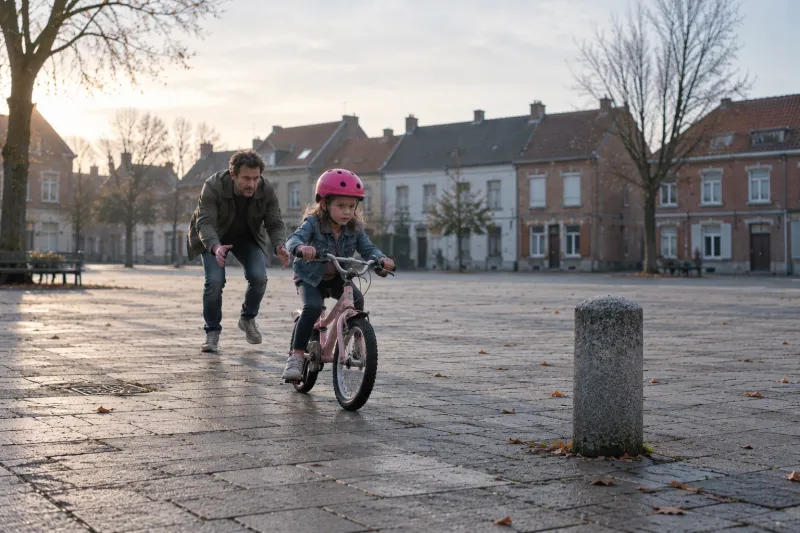
Emotion is powerful. It turns a message into a memory.
It lifts a good campaign into something people talk about, share, feel part of. It’s the difference between being noticed and being remembered.
But somewhere along the way, emotion became overused. It never stopped working; we stopped thinking about how it works. We started reaching for it automatically. The slow music. The soft voice. The meaningful stare. A kiss. What used to be a sharp creative tool became a default setting. And default doesn’t get remembered.
What the research really says about emotional effectiveness
System1, a research agency focused on predictive ad testing, has studied the effectiveness of thousands of campaigns. Their findings are clear: the ads with the most impact are the most memorable ones, and those are rarely the most emotional. They land a single strong moment. One surprise. One feeling, anchored to a brand you can’t forget.
That same principle runs through The Long and the Short of It by Les Binet and Peter Field. Emotion helps build long-term brand value, provided it’s tied to something. To structure, to storytelling, to branding. Without that, even the most beautifully crafted ad struggles to create long-term growth.
The Ehrenberg-Bass Institute reinforces this. Their research shows that emotional content only drives effectiveness when it also builds mental availability. In other words: it must help people remember the brand. No fluent assets? No distinctive codes? No memory.
B2B needs emotion too
In B2B, this becomes even more pronounced. LinkedIn’s 2025 report on B2B marketing found that decision-makers aren’t moved by sentimentality. They’re moved by confidence. Emotion still matters, only sharper. Less tearjerker, more trust-builder. The reassurance that someone like them made this decision, and it paid off.
Behavioural science gives us the mechanics. The affect heuristic, coined by Paul Slovic, explains how people use emotion to simplify decisions, which works as long as the emotion reduces complexity rather than adding to it. Cognitive load theory warns that too much emotional input overwhelms working memory, making the message harder to process. And Kahneman’s peak-end rule reminds us that sustained emotion earns you little. What counts is the moment that peaks and the impression that lingers.
How to use emotion to drive brand recall
So the goal isn’t to remove emotion from campaigns. It’s to use it precisely. With intent. As a strategic tool rather than background noise. Less mood. More memory. Emotion that supports the idea instead of replacing it.
Great campaigns don’t lean on emotion to fill a gap. They use it to make something sharp even sharper. Emotion doesn’t soften the message there, it etches it deeper. Being moving is a by-product. Being remembered is the point.
So the next time someone says, “let’s make it emotional,” the answer isn’t no. The answer is: sure. But which emotion? When? And how do we make sure they remember who made them feel that way? Because the feeling isn’t the idea. The feeling is what helps the idea survive.
And that’s why your campaign probably needs less emotion. Not more.